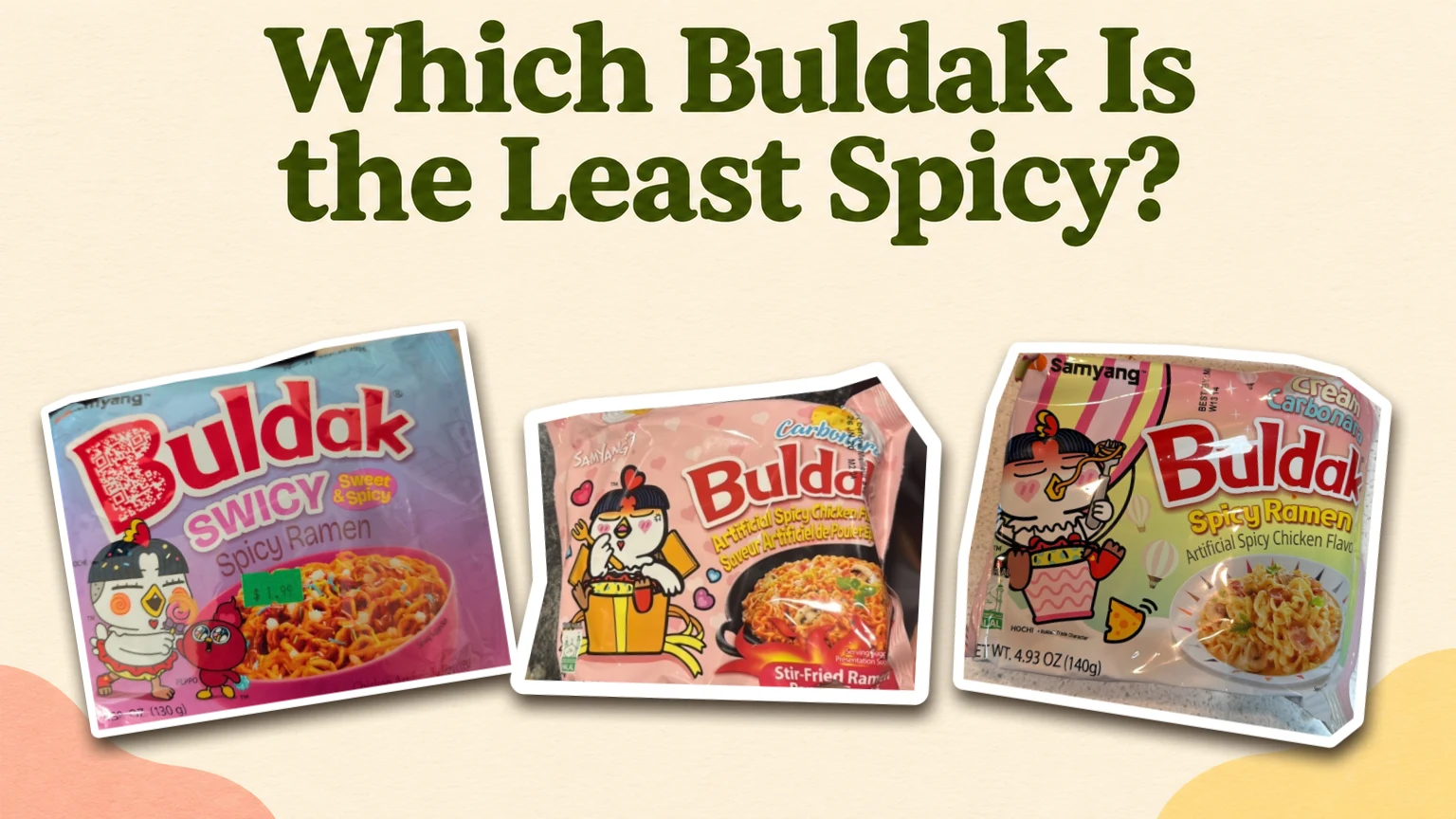
Swicy is the least spicy option in Buldak’s current U.S. ramen flavor guide. It is rated Level 1 on the brand’s scale, while Carbonara is Level 2 and Original is Level 4. For a first purchase, the next question is which flavor you want: sweet heat or a creamy sauce.
This guide focuses on official U.S. product information checked on November 4, 2026. The comparisons below are based on manufacturer descriptions and labels, rather than a side-by-side taste test. They cover the U.S. lineup, not every Buldak product sold worldwide.
Pick your first pack by flavor
Buldak’s official flavor guide places Swicy in its lowest heat group. Carbonara, Cream Carbonara and Rose share the next group. For a beginner, that gives you a useful shortlist without starting with Original or 2X Spicy.
| What you want from your first bowl | Start by considering | The main distinction |
|---|---|---|
| The lowest heat group in the U.S. guide | Swicy | Sweet-and-spicy flavor with a sweet topping |
| Creamy seasoning with chili heat | Carbonara | The standard Carbonara product |
| A richer version of the cream profile | Cream Carbonara | A separate recipe and finishing method |
| Another creamy option to compare | Rose | Included in the same broad heat group as the Carbonara flavors |
You do not need to treat these as steps in a challenge. Choose the flavor that sounds good to you, then check its heat rating and the exact pack.
Swicy: start here if lower heat comes first
Swicy combines sweet and spicy. The pouch comes with crunchy, star-shaped sugar sprinkles, according to Buldak’s Swicy guide. If sweet chili-style flavors appeal to you, that topping is a reason to consider it alongside the lower heat rating.
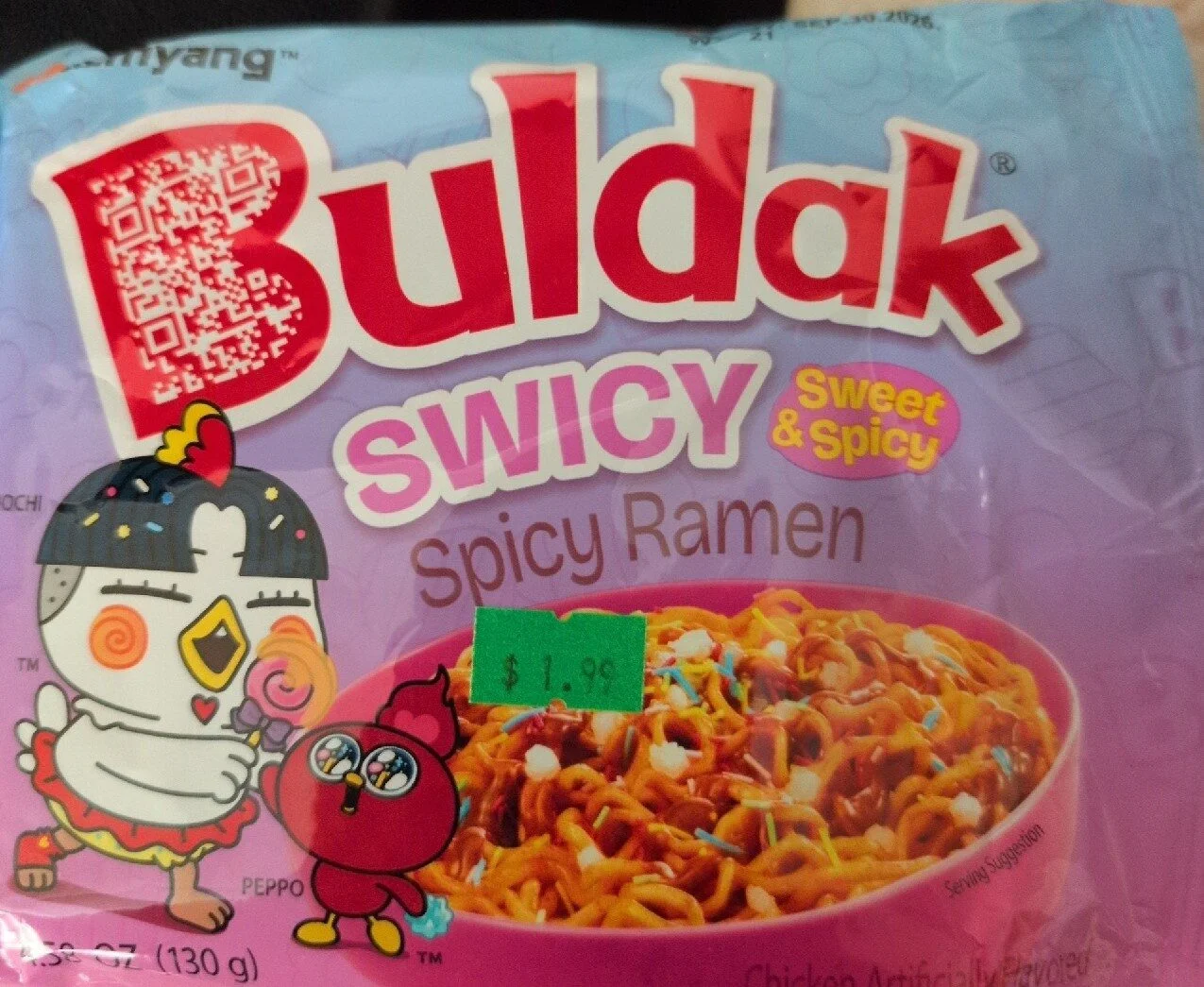
The U.S. Swicy product page says to cook the pouch noodles for 5½ minutes, drain all the water, then mix in the sauce and sprinkles. It is a sauced noodle dish, so follow that draining step rather than leaving a bowl of broth.
Look for Swicy written on the package. The flavor name gives you a firmer starting point than the color of the bag, especially when packaging changes.
Carbonara: consider it when you want a creamy flavor
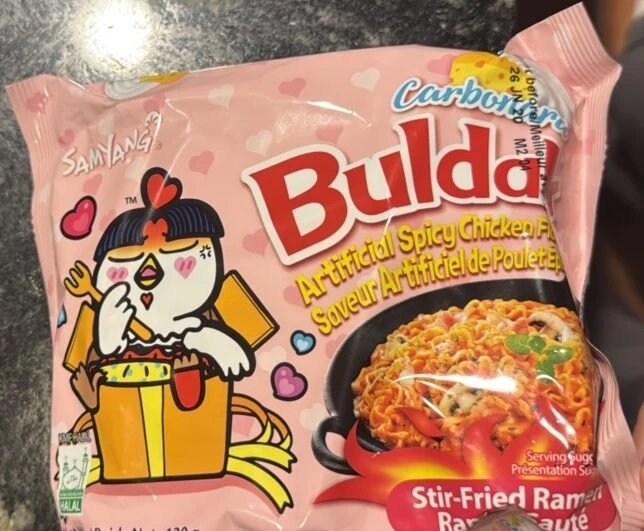
Carbonara combines creamy seasoning with Buldak’s spicy sauce. Its U.S. pouch instructions say to cook the noodles for 5 minutes, retain half a cup of cooking water, and mix in the sauce and cheese powder.
That is already different from Swicy’s fully drained preparation. If you choose Carbonara for the cream profile, use its own directions to get the intended sauce consistency.
Creamy does not mean chili-free. The Carbonara sauce ingredient list includes chili pepper and chili pepper seed oil, so the name alone should not set your heat expectations.
Cream Carbonara: check the extra word on the pack
Cream Carbonara has its own ingredient list. The powder includes butter and a mixed cheese powder containing cheddar, gouda and camembert; the sauce also lists milk and cheese sauce.
Its finishing sequence differs too: the U.S. page says to keep some cooking water, add the sauce and briefly stir-fry, then add the finishing packet. Standard Carbonara adds its sauce and cheese powder before mixing.
Buldak positions Cream Carbonara as the richer, smoother alternative in its flavor guide. That helps you choose a flavor direction, but the guide groups both Carbonara versions together rather than establishing an exact measured heat difference.
Read the heat scale as a comparison
The brand’s lineup overview lists Swicy at Level 1, Carbonara at Level 2 and Original at Level 4. These are positions on Buldak’s own scale, not a Scoville chart or a statement that Original feels four times hotter than Swicy.
Swicy still contains spice. The lower rating helps compare products; your own tolerance determines how the bowl feels.
Check the pack before buying
For a lower-heat first choice, look for Swicy. If you want a cream-based flavor, compare Carbonara and Cream Carbonara by their full names and ingredient lists.
The U.S. product pages for all three list wheat, soy and milk. Swicy contains milk even though its name does not mention cream. Check the full ingredient and allergen label on the actual package you buy.
Also confirm whether you are holding a pouch or a bowl, and follow that format’s instructions. If you are shopping during a Korea trip, check the local pack and its rating rather than assuming the U.S. lineup and recipe apply unchanged.